Otto Frank
Diary of Anne FrankOtto Frank is Anne Frank’s father, known to her affectionately as Pim, and the family’s principal source of steadiness through flight, concealment, and the strained routines of life in the Secret Annex. A former businessman who prepared the family’s escape from Nazi persecution, he appears in Anne’s diary as a considerate parent and companion; after the war, he becomes the custodian and first editor of her manuscripts, helping turn a private record into a work read around the world.
Identity and Background
Born in Frankfurt am Main to a prosperous family, Otto grew up amid parties, balls, banquets, and a large household. His father, Michael Frank, had made his own fortune through banking, but much of the family’s wealth was lost after his death and the inflation following the First World War. Anne recalls Otto laughing that, at fifty-five, he had for the first time scraped out a frying pan at the table. The contrast between his privileged upbringing and the materially restricted life of concealment gives her family history a sharp domestic measure: a change in circumstances registered not only in lost money, but in the smallest habits of eating.
Otto married when he was thirty-six; his wife, Edith, was twenty-five. Their elder daughter, Margot, was born in Frankfurt in 1926, and Anne was born there on June 12, 1929. Because the family was Jewish, Otto immigrated to the Netherlands in 1933 and became managing director of the Dutch Opekta Company, which made products used in jam-making. Edith followed him in September; the girls stayed with their grandmother in Aachen before joining their parents in the Netherlands. As anti-Jewish laws and persecution in Germany intensified, the family’s move became a refuge that itself would later be threatened by occupation.
After the German occupation of the Netherlands, restrictions progressively narrowed Jewish life: Jews had to wear a yellow star, surrender bicycles, observe limits on shopping and movement, and avoid public transport, entertainment, sports facilities, and visits to Christian homes. Anne’s account presents these measures as accumulating intrusions into ordinary life. Otto’s practical response was shaped by the danger they posed: rather than wait for the family to be seized, he began arranging a place to hide.
Preparing for Hiding
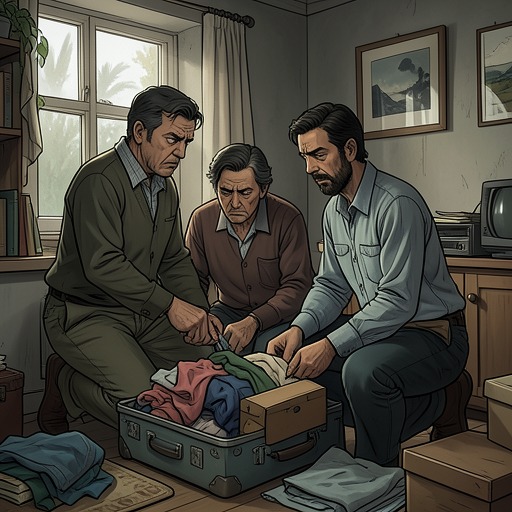
Before the family entered hiding, Otto and others had been moving clothes, food, and furniture out of the apartment for months. The family originally intended to go into hiding on July 16, but Margot’s call-up notice forced them to leave ten days earlier. On the morning of their departure, Otto and Edith set out with Anne in pouring rain, carrying schoolbags and shopping bags filled with belongings. The yellow star on their clothing made their situation visible to passersby, while the decision to go ahead on short notice meant the rooms at their destination would be less orderly than planned.
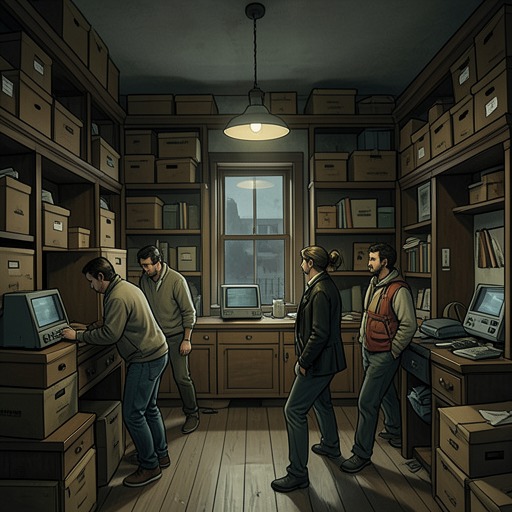
Otto’s office building became the hiding place. Its working areas included a warehouse, offices, a kitchen, and upper-floor storage; behind an ordinary gray door at the back was the Secret Annex, a group of rooms concealed from the building’s ordinary activity. The family’s presence was known to trusted office workers, while the warehouse staff were not told. The concealment depended on the building’s layout and on maintaining a careful distinction between those who knew and those who did not.
The decision to hide was not sudden improvisation. Otto had already explained to Anne that they did not want their possessions seized or to fall into German hands, and that they would leave on their own terms rather than wait to be deported. He also acknowledged that living cut off from the world would be difficult. His reassurance that the adults would take care of the arrangements let Anne continue, for a little longer, with the life of a child before the family crossed into concealment.
Life in the Annex
Within the Annex, Otto’s character is most often conveyed through small acts of consideration. At meals, Anne describes him as the most modest person at the table: he watched to see whether everyone else had been served, asked little for himself, and preferred that the best portions go to the children. Her description of him as goodness personified makes his kindness a repeated domestic fact, not an abstract virtue detached from the shortages and irritations of communal life.
He also shared his daughter’s work and study. Otto and Anne worked on the family tree, with him telling her about each person as they went along. Anne was learning French and trying to recover schoolwork, while Otto wanted her help with his Dutch lessons. She agreed to tutor him in exchange for his assistance with French and other subjects, teasingly noting his mistakes. Their arrangement gave them a reciprocal routine: the father was not only a protector but a learner, and Anne could help him in return.
The diary also places Otto within the Annex’s ordinary, crowded rhythms. At one point, after reading, Margot closes her book, Edith begins talking with Margot, and Otto is drawn into the conversation; by nine o’clock, it is breakfast. Such scenes are modest, but they show a family making a day from reading, talk, work, and meals inside confinement. They also set against the threat outside a form of closeness built from repeated shared habits.
Otto’s work life had already been disrupted before the move: Anne remarks that he had been home frequently because there was little for him to do at the office. Mr. Kleiman had taken over Opekta, while Mr. Kugler managed Gies & Co., the spice business established in 1941. In hiding, the office’s familiar rooms and business functions became part of the family’s protection, even as the adults’ former working lives were diminished or reassigned.
That protection remained precarious. After burglars forced doors at the warehouse and street entrance, Otto and Peter responded by going to the private office, tuning the radio to a German station, and locking the door. The residents followed their safety orders: no washing or running water, quiet, dressed by eight, and no bathroom use. The burglary cost them cashboxes, blank checkbooks, and coupons for 330 pounds of sugar, their entire allotment. The incident exposed how a disturbance in the commercial building could immediately become a danger to the people hidden above it.
Following another security scare, the residents faced tighter rules and practical changes. Peter was assigned to patrol the house; a carpenter from the underground was expected to build a barricade from the white Frankfurt bedsteads; and the household debated whether the night watchman could be trusted and whether dogs would bark at someone outside the door. Mr. Kugler reproached the residents for carelessness, and Jan warned them not to go downstairs. The Annex’s apparent domestic routines were therefore always conditional on vigilance, concealment, and the decisions of people outside the family.
Father and Daughter
Anne’s relationship with Otto is affectionate, but it is not presented as free of tension or misunderstanding. She calls him the most adorable father she has ever seen and uses the pet name Pim, while also identifying him as the parent whose trust and support matter deeply to her. In May 1944, after a painful letter from Anne, the two had a long conversation and both cried. Otto told her that her words had hurt him because he believed her parents had loved, helped, and defended her, and that she had done them an injustice by describing herself as wronged and left to her own devices.
The exchange reveals a gap between intention and reception rather than a simple rupture. Otto answers Anne’s sense of grievance by recalling the care he believes the family has given her; Anne’s diary makes room for both his hurt and her own struggle to be understood. Their bond is strong enough to sustain candor, but the pressure of adolescence and confinement makes even parental care difficult to interpret in the same way on both sides.
Anne’s comparisons between her parents further clarify Otto’s place in the household. She feels that Edith cannot provide the model of tact and respect she wants from a mother, and says that Otto avoids conversations about Edith. Elsewhere, Anne and Margot feel that they are treated as children in external matters even while inwardly they have grown older than girls their age. Anne declares her independence of judgment and her confidence in her abilities, yet her diary’s continued attention to Otto, their study sessions, and their painful conversation shows that independence does not erase the need for his recognition.
The family’s past also surfaces through Otto’s stories. When Anne asks about their background, she recounts his Frankfurt childhood, the wealth of his parents, the family’s losses, and the social world that preceded the war. The recollection places the family’s present scarcity against an earlier life of security, but does not reduce Otto to a vanished status. His willingness to share these histories makes him a link between Anne’s private adolescence and the larger family past.
Arrest, Survival, and the Diary’s Afterlife
The diary ends on August 1, 1944. Three days later, on August 4, Otto and the other people hiding in the Secret Annex were arrested. After their arrest, Miep Gies and Bep Voskuijl found Anne’s papers scattered on the floor; Miep put them away unread in a desk drawer. After the war, when it had become clear that Anne was dead, she gave the papers to Otto. He was the only member of his immediate family to survive the Holocaust and the only one of the eight Annex occupants to survive the concentration camps.
Otto’s survival brought him back to the Netherlands. After Auschwitz was liberated by Russian troops, he was repatriated by way of Odessa and Marseille, arriving in Amsterdam on June 3, 1945. He remained there until 1953, then moved to Basel, where members of his family lived. He married Elfriede Markovits Geiringer, a Vienna-born Auschwitz survivor who had lost her husband and son in Mauthausen. Otto continued to live in Birsfelden, outside Basel, until his death on August 19, 1980, devoting himself to sharing Anne’s diary and its message with readers around the world.
That work began with an editorial decision. Anne had first kept her diary for herself; after hearing a 1944 broadcast by Gerrit Bolkestein of the Dutch government in exile, who hoped to gather wartime eyewitness accounts for publication, she began revising it into a book while continuing her original diary. Otto later selected material from Anne’s original and rewritten versions to create a shorter published text. He had to fit a publisher’s series, and in the 1947 edition he omitted passages about sexuality and passages that he considered unflattering to Edith and other Annex residents. The published diary was therefore an act of preservation and selection: Otto carried out Anne’s wish to publish, while shaping the version readers first encountered.
After Otto’s death, he willed Anne’s manuscripts to the Netherlands State Institute for War Documentation in Amsterdam. Because the diary’s authenticity had been challenged, the Institute ordered a thorough investigation. Once its genuineness was established, the complete materials were published alongside the results of the study, which examined the Frank family’s background, the circumstances of arrest and deportation, Anne’s handwriting, and the documents and materials themselves. The Critical Edition presented the original diary, Anne’s rewritten version, and Otto’s published selection, making their different stages available for comparison.
The Anne Frank-Fonds, Otto’s sole heir and holder of Anne’s copyrights, later commissioned an expanded edition for general readers. Mirjam Pressler supplemented Otto’s original selection with material from Anne’s earlier versions; the approved edition contains approximately 30 percent more material. Otto had also chosen to use his family’s real names while following Anne’s pseudonyms for other people, and the expanded edition refers to the helpers by their real names. These editorial histories do not diminish his role: they show how his first decision made Anne’s writing public, and how later editions opened more of her own revisions and choices to readers. His enduring significance lies both in the father Anne remembered and in the survivor who protected, edited, and shared the record she left behind.